National Railways of Zimbabwe Museum, Bulawayo
- The railways have played an absolutely vital and integral part of Zimbabwe’s development and this was recognized from as early as 1892 when a start was made to build a two foot gauge line from Fontesville (on the Pungwe River inland of Beira) to Mutare. In 1893 work commenced on extending the three foot six inch line (1.067 metres) from Vryburg in the Cape north to Bulawayo. In 1897 the railway reached Bulawayo and by 1900 three-quarters of the current railway system had been built mostly by George Pauling.
- The Bulawayo Railway Museum recognizes this achievement and pays homage to the railwaymen: engineers, surveyors, station masters, drivers and guards who laid and maintained the railways, many died in the process.
Located in Prospect Avenue, off Josiah Chinamano and behind the OK Mart.
GPS reference: 20⁰09′50.09″S 28⁰34′25.55″E
The National Railways of Zimbabwe Museum, Bulawayo opened on 4 November 1972 to coincide with the 75th anniversary of opening of the railway line from Vryburg to Bulawayo. The museum is largely autonomous paying for most of the wages and expenses from the donations it receives from the public.
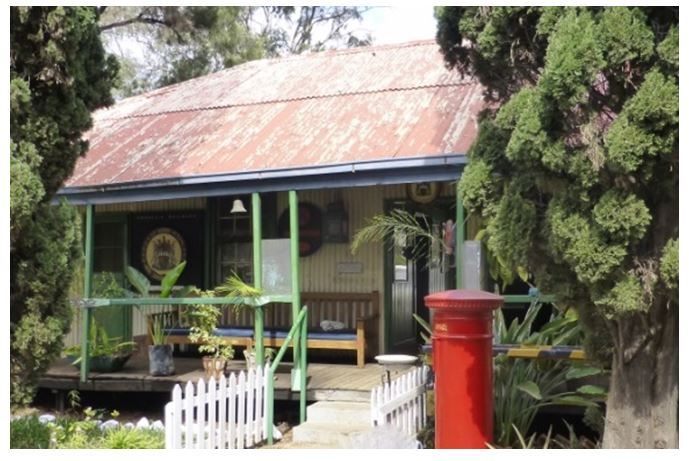
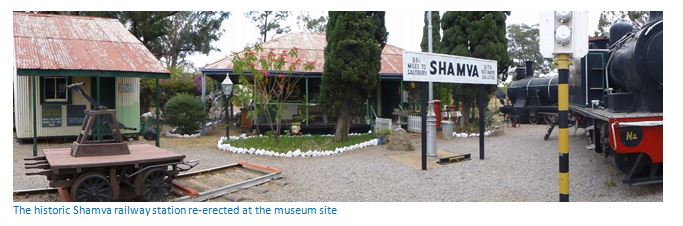
A corrugated-iron structure with a wooden framework make up the Museum office and entrance. In 1930 it was the Kildonian station building on the Maryland-Kildonian line serving the chrome industry on the northern section of the Great Dyke. In 1931 it was at Shamva until moved and re-erected in its current position at Bulawayo in 1972. Many of the exhibits are in the open as they are large and comprise heavy steam and diesel locomotives and rolling stock; it’s a refreshing change to be able to climb into the cab and imagine oneself as an engine driver steaming down the railway line!
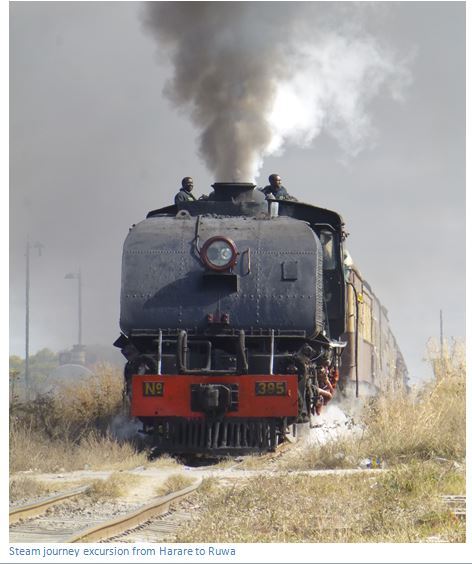
The first trains were narrow-gauge and travelling from Beira to Macequece (modern-day Manica) in 1897 was exciting and eventful. For example see the article Mary Blackwood Lewis’s letters on her journey to Mashonaland from Beira 1897-1901 under Maincaland on the website www.zimfieldguide.com. The narrow gauge lines soon gave way to the standard gauge of 1.07 metres (3 foot 6 inches) and the locomotives evolved from the small wood-burning engines pulling 7,160 lbs to the massive Beyer Garrett capable of pulling 52,364 lbs. Both these types and more are represented at the Railway Museum.
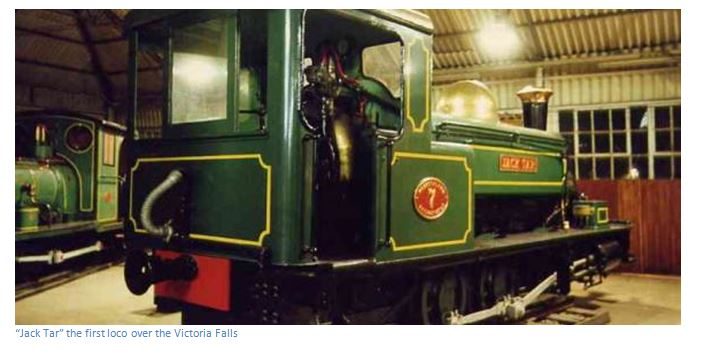
E1 "Jack Tar" (No MR 7) Saddle Tank 0-6-0; Manufactured 1889; Tractive Force 7,160 lbs, Weight 19 tons 1 cwt
Jack Tar,” built in 1889 was the first locomotive to the Victoria Falls, where it arrived decorated with palms and flowers and a board inscribed “we’ve a long way to go” on 25th April 1904. Originally 3 ft gaugeI it was altered to 3 ft 6 inches and used on the on the widening of the line between Beira and Umtali (now Mutare) in 1896. In 1899 during the Anglo-Boer War it was used to move Australian and New Zealand troops from the coast to Umtali. It was then dismantled and sent across the Victoria Falls Gorge on a blondin cable during the construction of the Victoria Falls Bridge and was used in the construction of the line into present-day Zambia. Being of light weight it was the first locomotive to steam over the Victoria Falls Bridge on its completion.
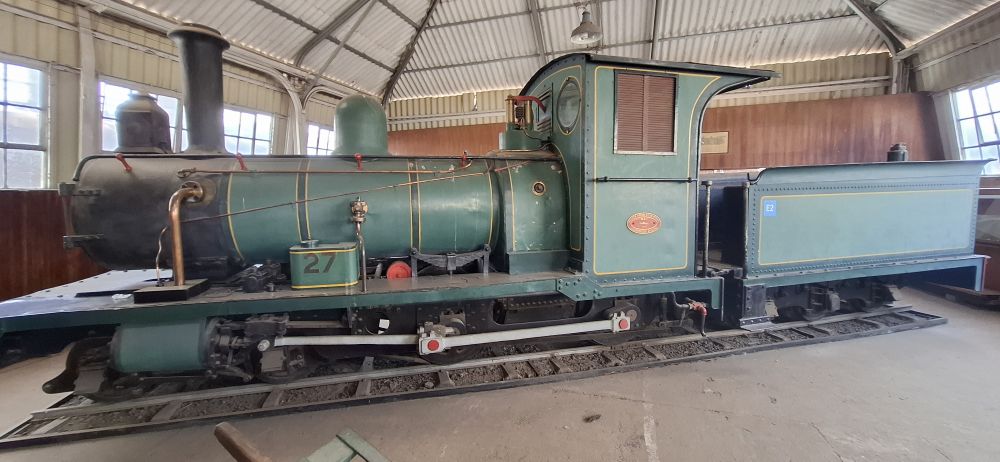
E2 "Lawley Locomotives" (No BR 19 or BR27) Falcon Locomotive 4-4-0; Manufactured 1897; Tractive Force 3,987 lbs, Weight 20 tons 10 cwt
These locomotives were acquired from the Falcon Locomotive and Carriage Works between 1893-98 for the construction and operation on the Beira Mashonaland Railway and named "Lawleys" after the resident engineer. However when the gauge widened from 2 ft to 3 ft 6 inches in August 1900 they were left abandoned at Bamboo Creek in Mozambique before being sold to logging and mining busineess that used the narrow 2 ft gauge. It is believed this loco was sold in 1919 to the Premier Portland Cement Company to carry limestone from quarries at Claremont to the factory at Cement outside Bulawayo. In 1935 it was purchased by the Rhodesia Native Timber Concessions at Gwaai before decommissioning in 1955. Recovered in 1961 with another Lawley they were combined to make this locomotive.
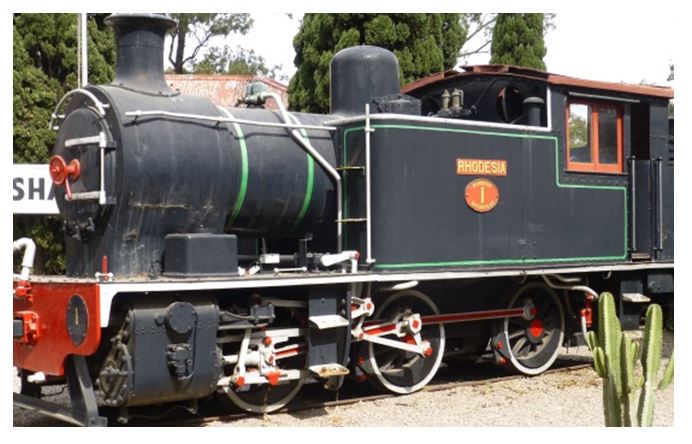
E3 "Rhodesia" (No RR 1) Tank Locomotive 0-6-0; Manufactured 1929; Tractive Force 17,785 lbs, Weight 36 tons
Built by Hudson Clarke & Co for shunting at Beira docks alongside RR2 "Winston Churchill" (now in the Mutare Museum) However the wheel base was too long for use, they were stored for 12 years before moving to Mafeking, then Umtali (now Mutare) before coming to Bulawayo.
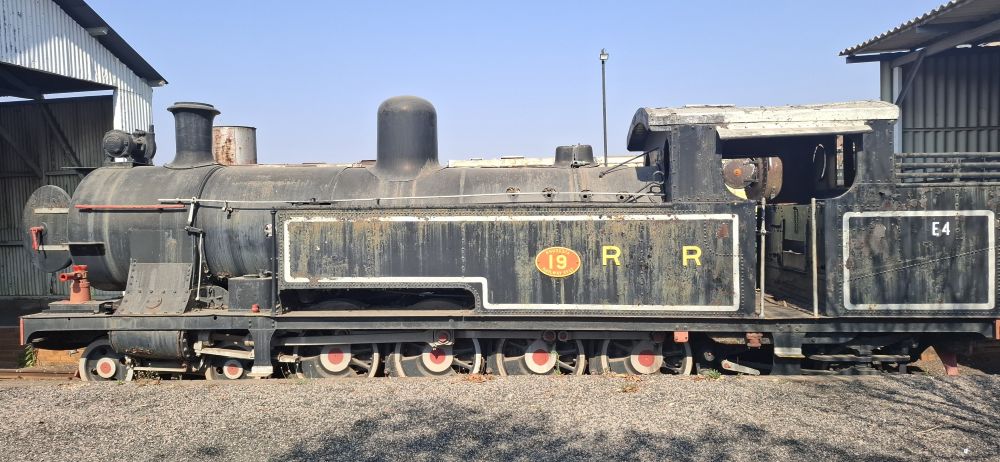
E4 (No 19) Side Tank 6th Class Locomotive 4-6-2; Manufactured 1906; Tractive Force 18,600 lbs, Weight 59 tons 10 cwt
Built by Nelson Reid and Company they were assembled in Umtali )now Mutare) having being carried from Beira on the narrow 2 ft gauge line although No 19 was assembled at Salt River, Cape Town as part of a second batch. They feature in many early photos and were widely used before being replaced by larger locomotives and assigned to shunting duties. No 19 was converted in January 1922 at the Mutare workshops and used as a shunter before being retired in 1958.
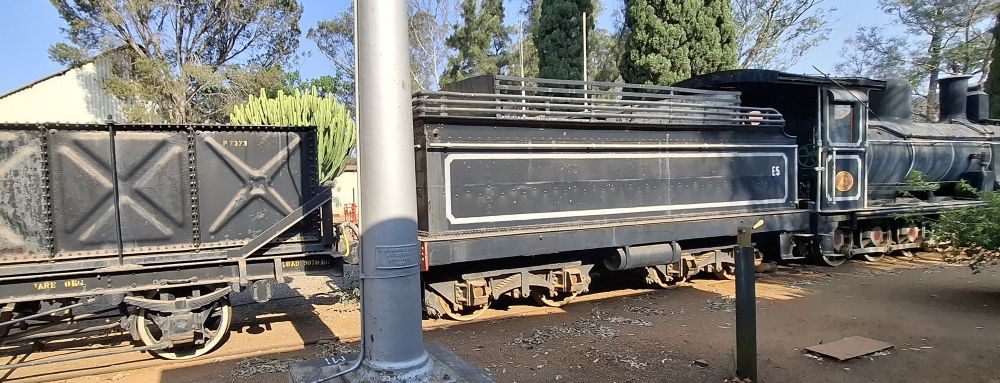
E5 (No 43) Locomotive 7th Class; 4-8-0; Manufactured 1903; Tractive Force 18,660 lbs, Weight 83 tons
Built by North British Locomotive Works (Scotland) they proved admirable workhorses, this loco clocking up 1,120,750 miles. Easy to repair, they were popular with engineers. Locomotive 43 was last on mailline duties in 1964 and thereafter on special occasions, in 1997 hauling the "Centenary train" marking 100 years of railways in the country from Figtree to Bulawayo.
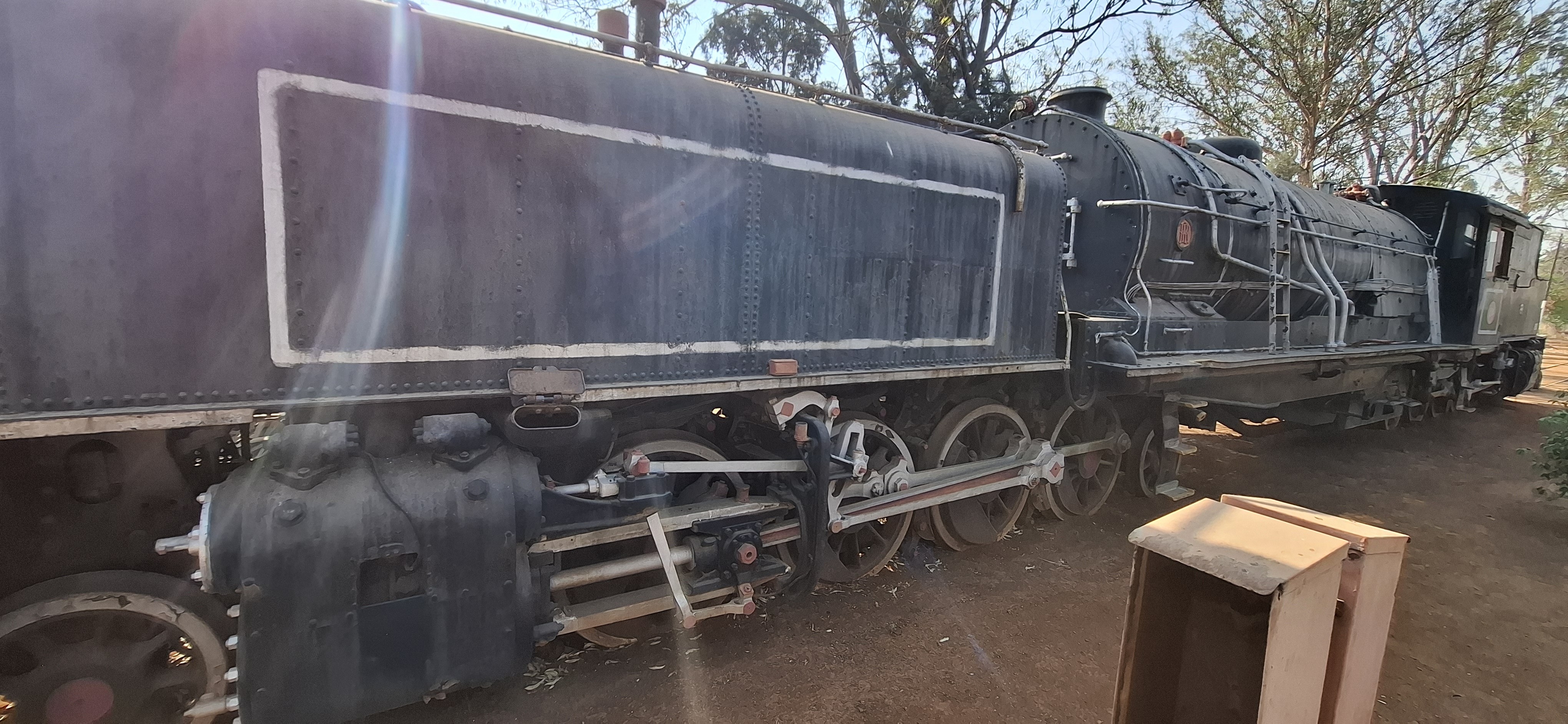
E13 (No 600) Garratt Locomotive 16th Class 2-8-2 + 2-8-2; Manufactured 1929; Tractive Force 52,364 lbs, Weight 155 tons
Built by Beyer Peacock and Company with a weight and pulling power that far surpassed any earlier locomotives they were used on the Hwange-Livingstone line where gradients were particuarly steep. When the easier gradients of the Deka-Victoria Falls opened in 1932 they were transferred to other areas. Originally numbered 221 this loco was last used upto 1967 with shunting duties at Bulawayo and Gweru having travelled 1,621,994 miles.
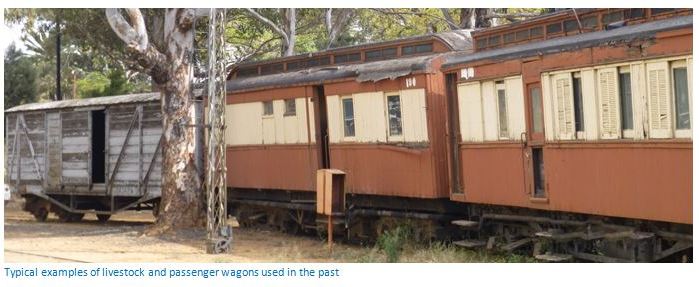
On display are some magnificent examples of early passenger coaches, including Cecil Rhodes' private saloon, which was also used to carry his coffin from Cape Town to Bulawayo for his burial in the Matobo in 1902. But there is also a variety of general rolling stock including livestock wagons, passenger wagons, dining cars and a General Managers luxury private saloon, complete with kitchen, bathroom, dining room and bedroom.
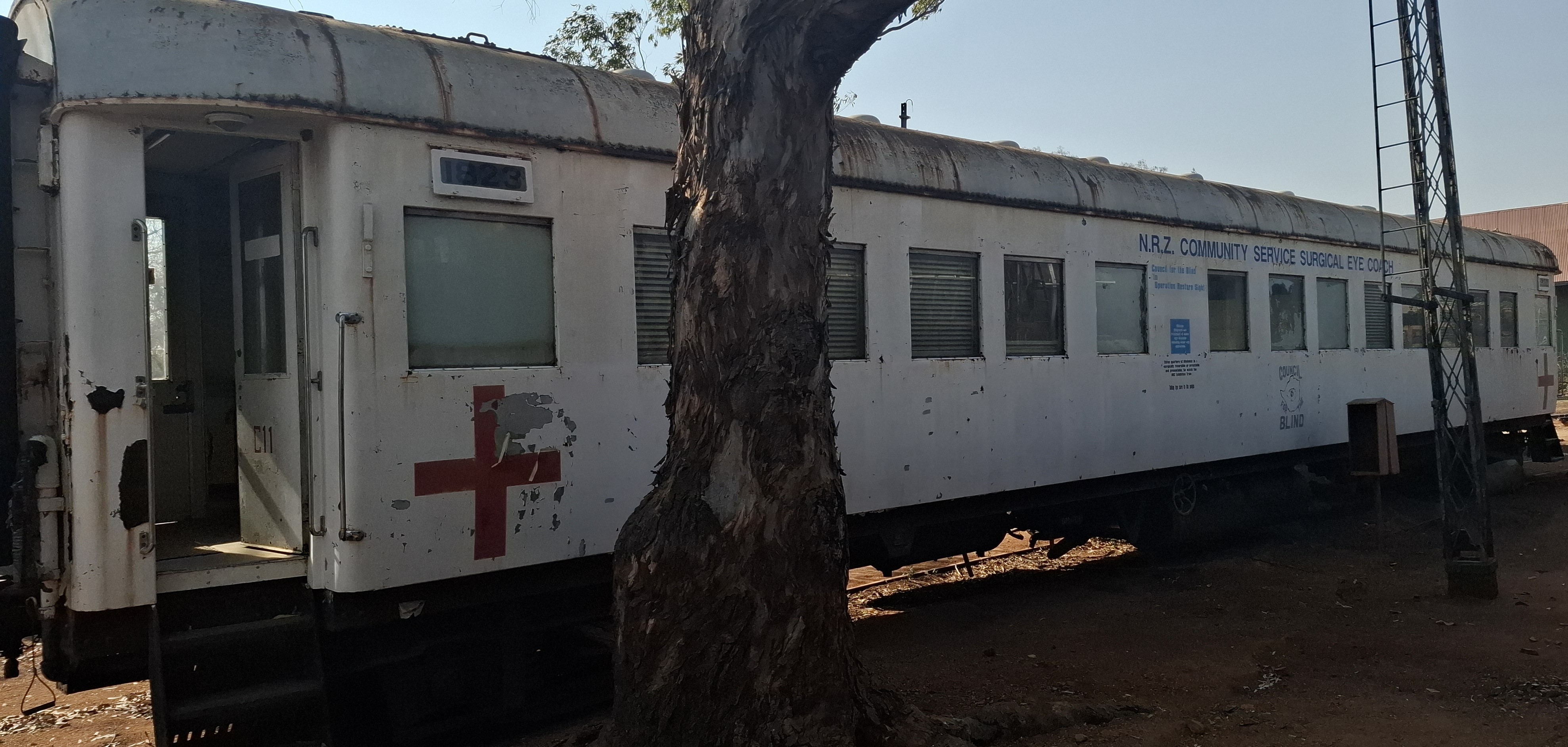
C11. Coach No 1823 - mobile eye surgery coach
Built by Gloucester Railway Carriage and Wagon Company Ltd in 1958 - one of 12 built as a batch. The coach's functioin changed in 1997. Prior to this it had been an army surgery for Zimbabwean troops guarding the war -damaged railway line in Mozambique during that country's civil war. It was converted ibto an 'eye coach' and between 4 November 1997 and 4 February 1998 performed 5,000 consultations and over 500 cataract operations.
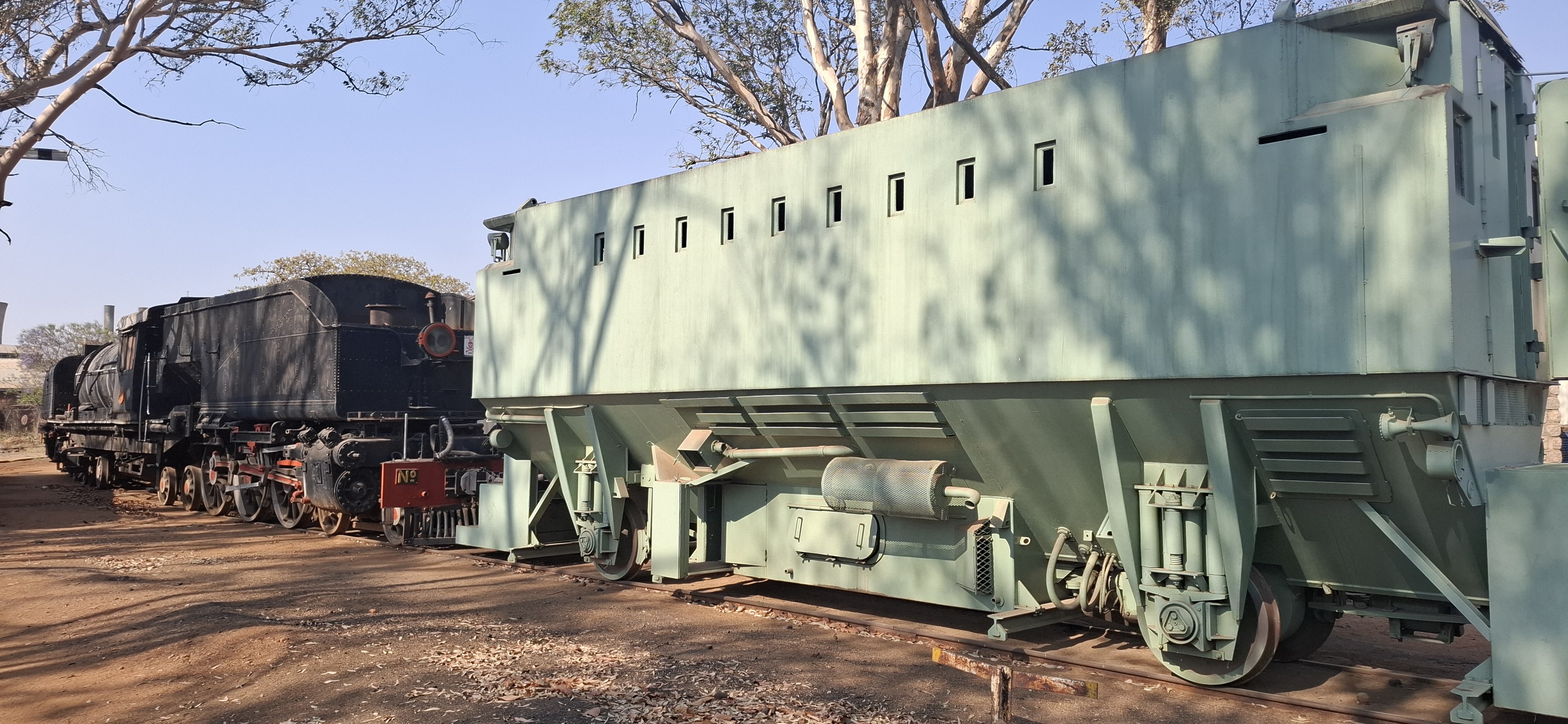 T7 Armoured Railcar "The Jackal"
Built locally in the late 1970's and capable of carrying 35 police, railway security or soldiers and powered by a Leyland 680 diesel engine. Intended as an armoured escort vehicle for passenger trains the armour proved too heavy for the engine and it was rarely used. Used once again in Mozmbique's civil war it was found underpowered again and unsuitable. Discarded and parked at the Bulawayo railway workshops, it was donated to the Museum and has been partially restored. Here seen hitched to a Garrett Locomotive No 411
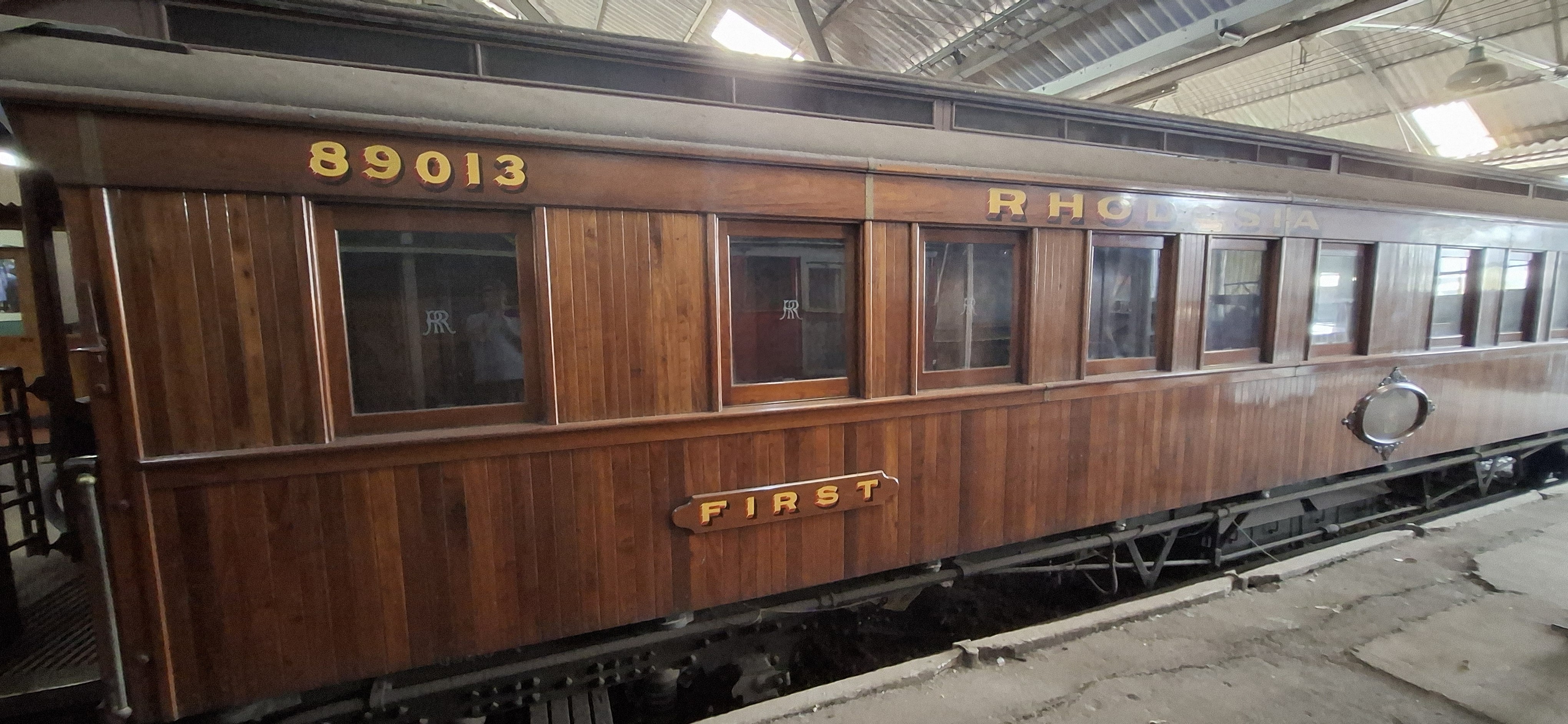
C3. Coach 89103 - Museum Coach
Built by Metropolitan Amalgamated Carriage Works in 1904 for the Beira and Mashonaland Railways it is one of the oldest coaches. Converted in 1922 to a second-class coach and again in 1931 as a dining / staff coach. In 1946 it was converted again as a combined first / second class coach for service on branch lines.
In 1967 it was modified to become a 'Mobile Museum demonstrating the history of the railways in Rhodesia (now Zimbabwe) and Botswana before finding a home at the Museum.
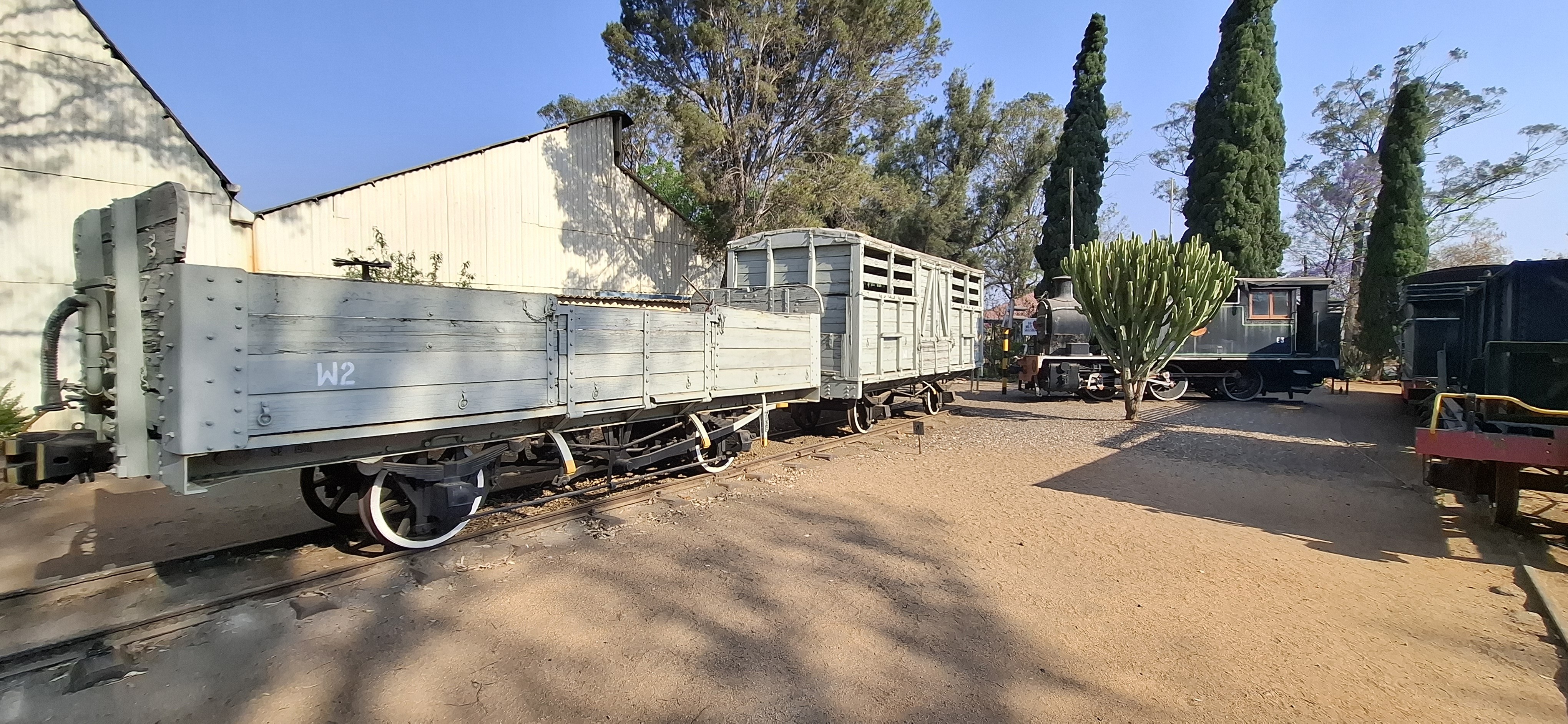
W2. Short open goods wagon
Built by the Canadian Car and Foundry Company this wagon entered service in 1918 and was used to carry bulky goods traffic, minerals and timber.
W8 Covered Wood K-Truck (No URR KHA-843429)
Built in 1927 by the Birmingham Railway Carriage and Wagon Company Ltd these wagons were used for generall goods and packages that could not travel on an open wagon.
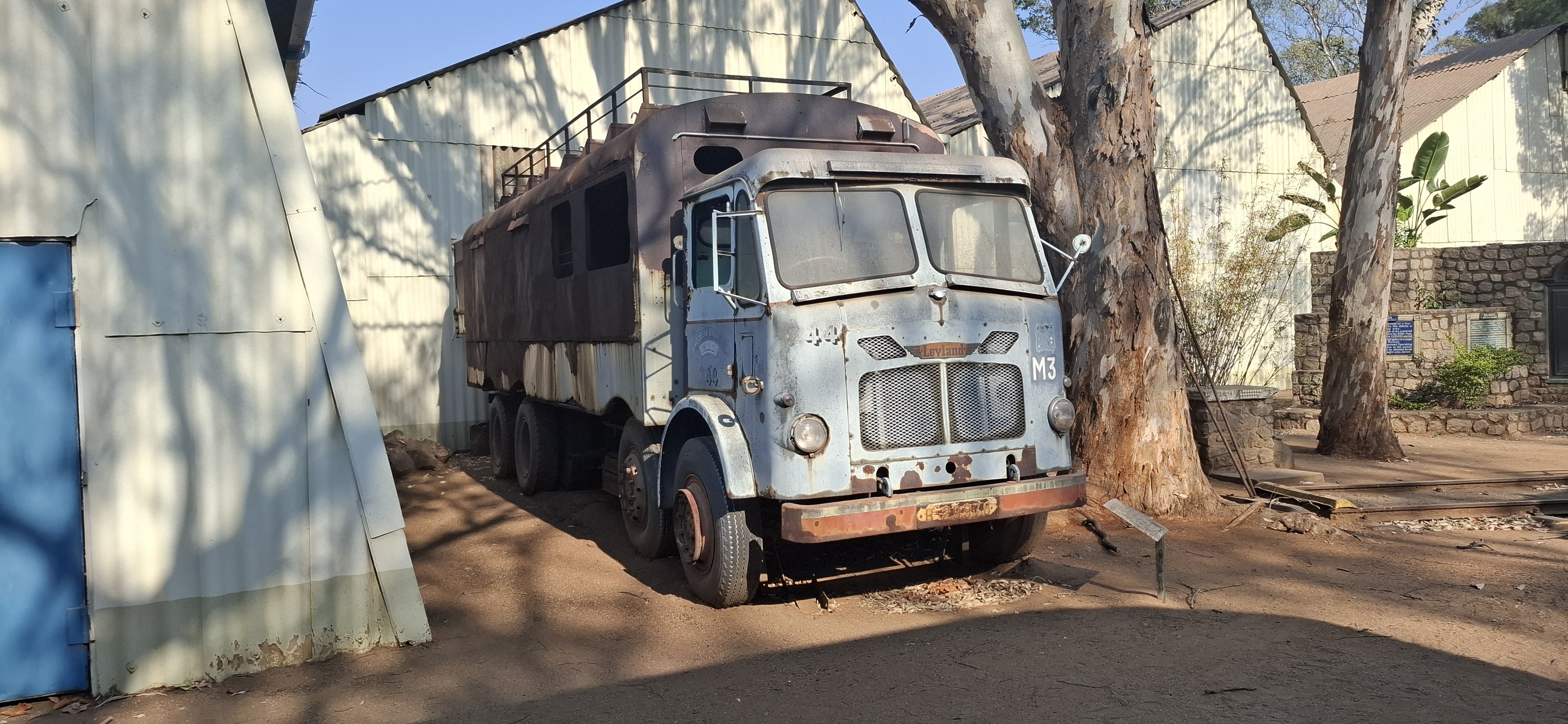
RMS Lorry No 244 Leyland Octupus
this vehicle, an Octupus 8-wheeled lorry was built by Leyland Motors Ltd and entered service in 1957 fitted with a dual purpose body to carry passengers and goods. The diesel engine was rated at 150 hp and this vehicle travelled nearly half a million kilometres before it was retired.
The Road Motor Service (RMS) introduced in 1927 linked the railheads to settlements without a rail link and its trucks and buses moved peoplem minerals, livestock, and construction materials across the country often providing a vital connection .
Key Railway Dates | |
1897 | Mafikeng to Bulawayo line opened |
1898 | Beira railway to Mutare opened (2 foot gauge) |
1899 | Mutare to Harare line opened (3 foot 6 inch gauge) |
1900 | Beira railway to Mutare converted to 3 foot 6 inch gauge |
1902 | Bulawayo to Harare line opened |
1904 | Bulawayo to Victoria Falls line opened |
1949 | Rhodesia Railways Ltd, a private company becomes Rhodesia Railways |
1979 | Zimbabwe Rhodesia Railways |
1980 | National Railways of Zimbabwe |
The Bulawayo Railway Museum should be on every visitor’s checklist and is a must for school children. It is thanks to the NRZ management, their workshops and engineering staff and dedicated volunteers and enthusiasts like Gordon Murray that this railway heritage has been preserved for the future.